Markets and food streets
Start with what you want to eat, or with the markets and streets to eat it in. Both come from public records: the dishes from the ministry’s regional cuisine database, the shops from the city’s licence register, the markets from the prefecture’s tourist listing.
What to eat
Counted from the city's food business register (current at 2026-06-30) by the word in each shop's registered name, which finds 6,126 places in all. Every count is a floor: a shop that serves a dish under another name is not in it.
Markets and food streets
 Kuromon Market 黒門市場 · Nippombashi, 164 m
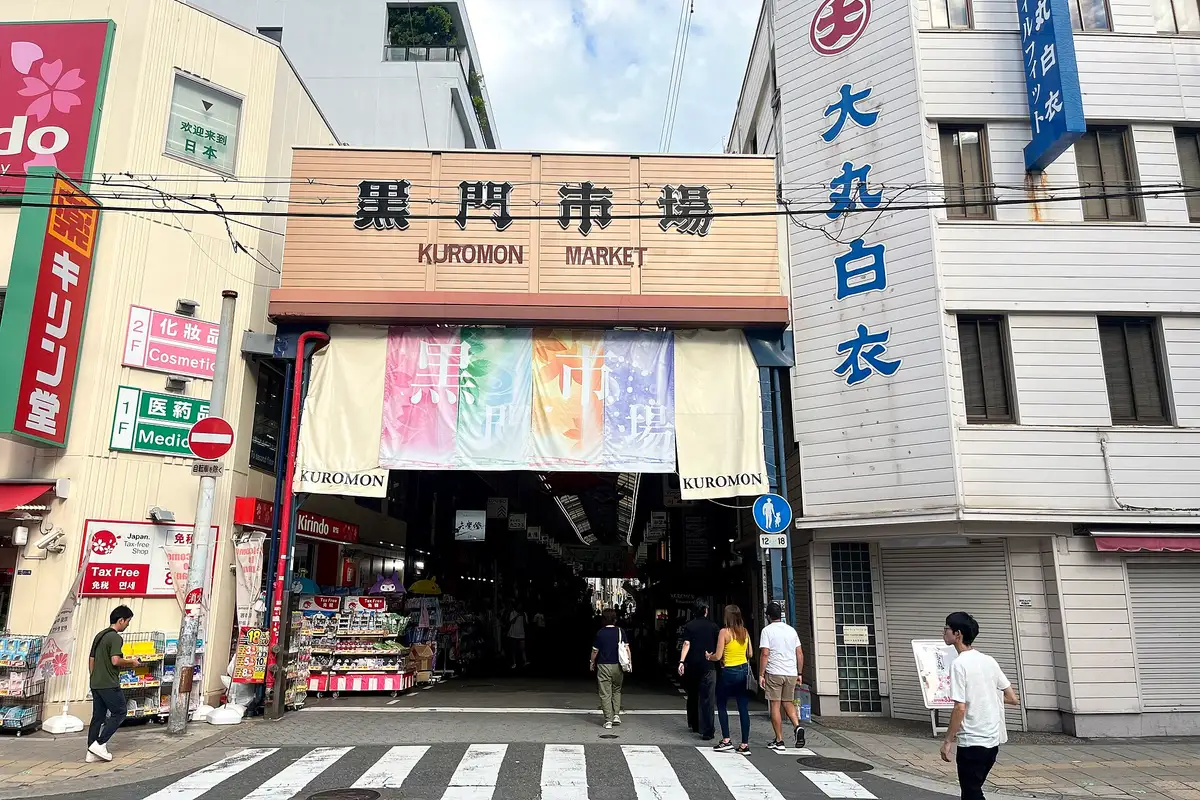
A market that has fed Osaka since the late Edo period, both wholesale and retail. About 150 shops selling fresh fish, vegetables, fruit, food, clothing and more line the roughly 580 m running south from Sennichimae. It began around 1822 to 1823, when merchants gathered by the black temple gate of Enmyoji in Nipponbashi to sell fish brought in from Sakai and Kishu, and it was called Enmyoji Market until the temple burned in the Namba fire of 1912. It burned again in the air raids on Osaka and was rebuilt after the war. Because many restaurant cooks shop here, there are many fugu and fresh-fish shops, and at the end of the year the market is packed with shoppers.
Translated and shortened from the Osaka Prefecture tourist listing (大阪府 観光施設一覧, CC BY 4.0).
Osaka Tsuruhashi Market 大阪鶴橋市場(鶴橋駅界隈) · Tsuruhashi, 415 m

Osaka Tsuruhashi Market spreads across Tennoji, Higashinari and Ikuno wards over an area the size of two Koshien stadiums, with about 800 shops in six markets and shopping streets. Around Tsuruhashi Station (JR Loop Line, Kintetsu, Osaka Metro Sennichimae Line) are yakiniku restaurants, Korean food shops and shops for traditional dress and fashion, and this international market draws people from all over Japan. Deeper in, narrow maze-like lanes hold shops for dried goods, household items, fruit and more, and a wholesale fish market where cooks from Osaka and even Kyoto come to buy from early morning. It began as a black market on burned-out ground just after the war; most traders have been here since then, and the market keeps its retro atmosphere.
Translated from the Osaka Prefecture tourist listing (大阪府 観光施設一覧, CC BY 4.0).
 Osaka-Kizu Wholesale Market 大阪木津卸売市場 · Daikokucho, 262 m
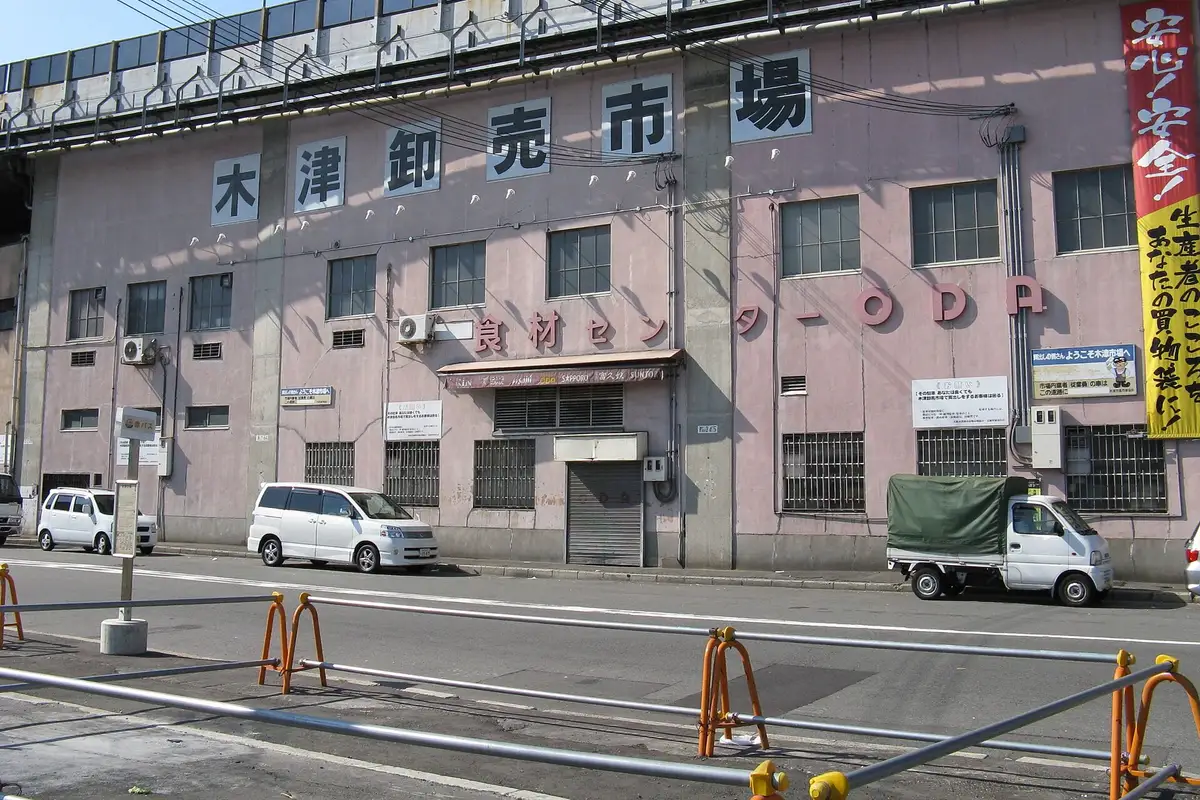
Osaka Kizu Wholesale Market has long been known as the market where professional cooks buy top-quality produce, with many orders from high-end ryotei restaurants. It also holds the Kizu morning market, with auctions, which draws crowds. Besides the wholesale market there is a large supermarket for the trade, a bathing facility with rock-bath saunas and open-air baths, and restaurants serving the market's fresh food.
Translated and shortened from the Osaka Prefecture tourist listing (大阪府 観光施設一覧, CC BY 4.0).
 Janjan Yokocho ジャンジャン横丁 · Dobutsuen-mae, 207 m
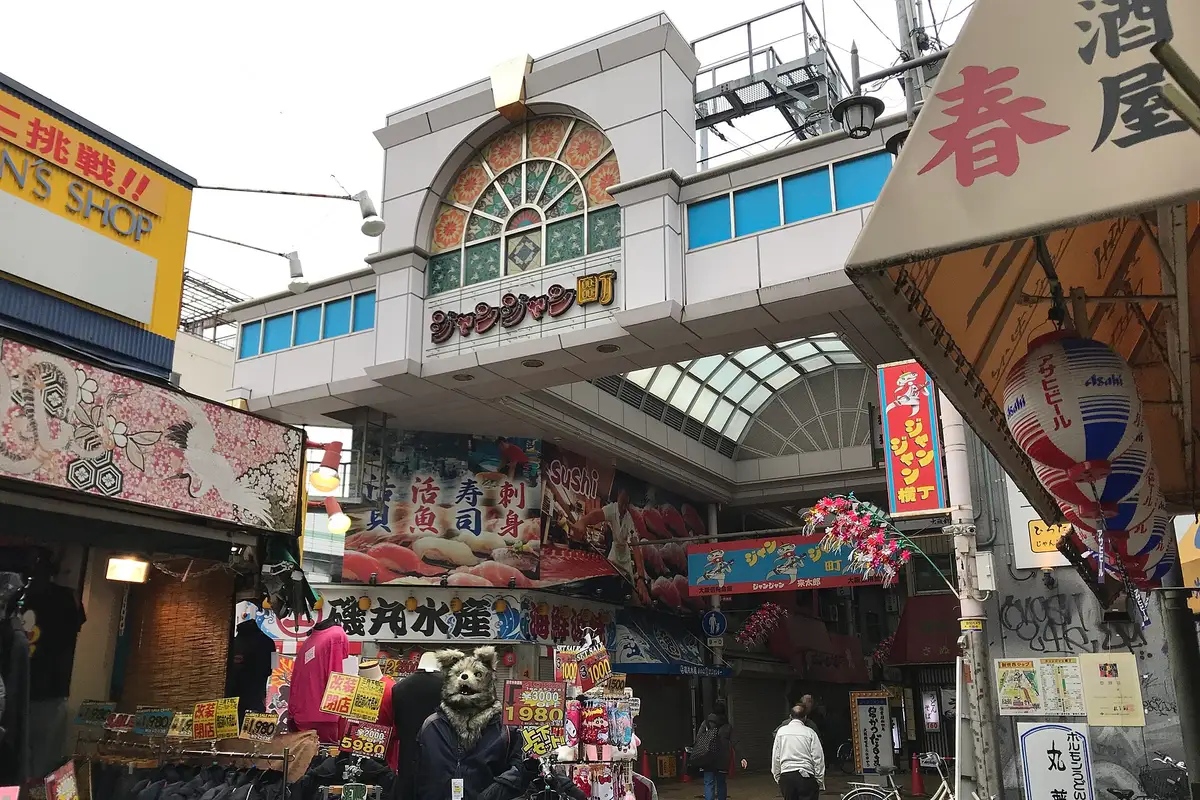
Janjan Yokocho is the nickname of the Nanyo-dori shopping street, which runs about 180 m north to south from Dobutsuen-mae subway station to Tsutenkaku in Shinsekai. The name is said to come from the shamisen and drums the shops played after the war to call in customers. Down both sides of the arcade are everyday places: kushikatsu shops with their rule against dipping twice in the sauce, yakiniku, canteens, sushi, udon and standing bars. In the district that produced the shogi master Sakata Sankichi, go and shogi clubs are busy, and you can watch the games through the windows.
Translated and shortened from the Osaka Prefecture tourist listing (大阪府 観光施設一覧, CC BY 4.0).
Hozenji Yokocho 法善寺横丁 · Namba, 157 m
Hozenji Yokocho keeps a quiet, old Naniwa atmosphere in the middle of the Minami nightlife district. The name boards on the gates at each end were written by Fujiyama Kanbi (west) and Katsura Harudanji III (east). Two lanes, each 80 m long and 3 m wide, run east to west, lined with long-established kappo restaurants, bars, okonomiyaki and kushikatsu shops, with footsteps echoing on the stone paving. The land was once the grounds of Hozenji, a Jodo-shu temple, and stalls for its visitors grew into the alley. Temple and alley burned in the air raids of the Pacific War and came back as an entertainment quarter after the war. It is the setting of Oda Sakunosuke's novel Meoto Zenzai and is sung about in the song Tsuki no Hozenji Yokocho. The Fudo statue that survived the war is covered in green moss from the water people pour over it as they pray. Having come through two fires at the old Nakaza theatre, the alley keeps its old charm and is still lively.
Translated from the Osaka Prefecture tourist listing (大阪府 観光施設一覧, CC BY 4.0).
 Sennichimae Doguyasuji Shopping street 千日前道具屋筋商店街 · Nippombashi, 328 m
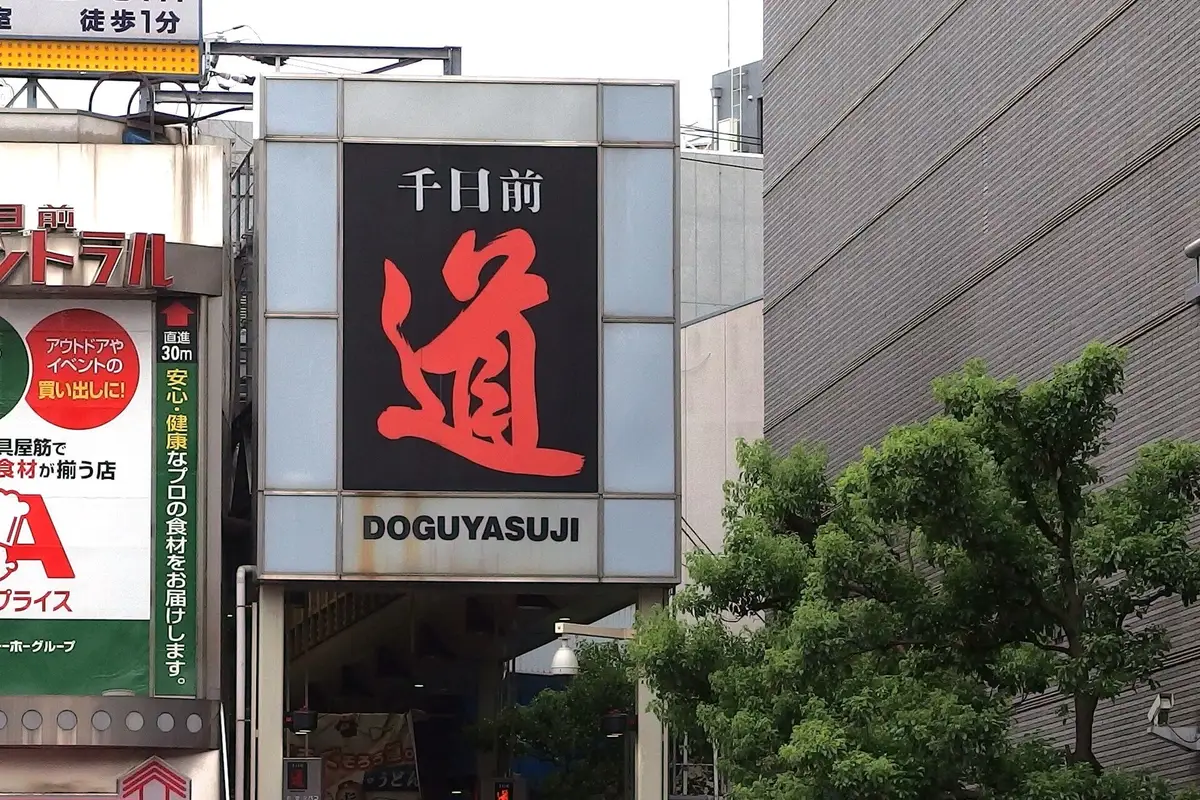
Sennichimae Doguyasuji is a shopping street of specialist shops selling every kind of cooking and kitchen tool. Osaka, called the nation's kitchen, is home to many skilled cooks, and the shops here stock tools fit for professionals. It began in 1882 as a row of second-hand goods and sundry shops along the pilgrims' road from Sennichimae by Hozenji to Shitennoji and Imamiya Ebisu Shrine. In the Taisho era it grew into wholesalers and makers, and in 1970 the arcade was built, giving today's 150 m street. The Doguyasuji Festival is held on 9 October, Tool Day, and a New Year tool market coincides with Imamiya Ebisu's festival on 10 January. You can also try making food samples and glass etching, and more restaurants have opened.
Translated and shortened from the Osaka Prefecture tourist listing (大阪府 観光施設一覧, CC BY 4.0).
Distances are in a straight line. Hours are not listed: no open source publishes them, so check before you go.