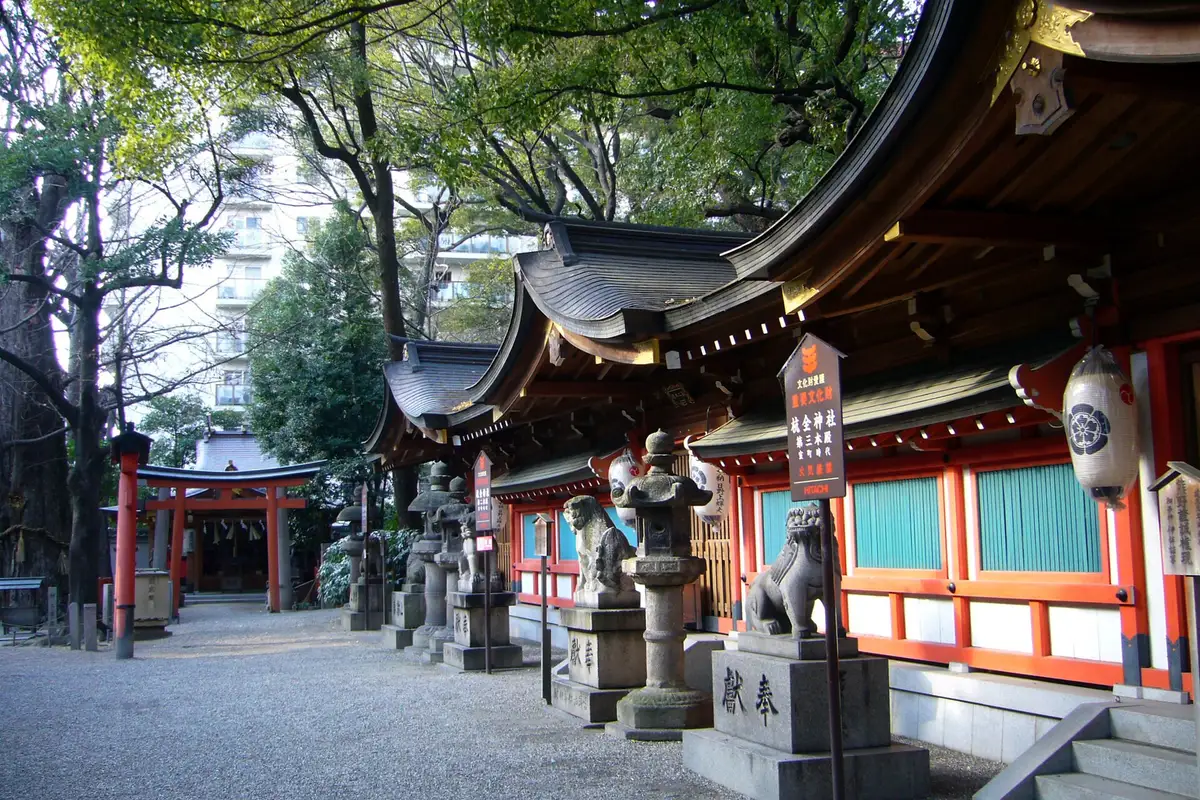
Kumata Shrine
杭全神社· Shrine
About
Kumata Shrine is an old shrine said to have been founded in 862, when Todo, a grandson of Sakanoue no Tamuramaro, the seii taishogun of the early Heian period, invited Susanoo no Mikoto and enshrined him in the first hall as the tutelary deity of Hirano-go. In 1190, at the start of the Kamakura period, the three Kumano deities were invited into the second hall, and by command of Emperor Go-Daigo, Izanami no Mikoto, Hayatamao no Mikoto and Kotosakao no Mikoto were enshrined in the third. All three halls are national Important Cultural Properties. The shrine has the only renga hall left in Japan. Renga gatherings had died out after the Meiji period but were revived in 1987, and the Hirano Horaku renga meeting is held regularly. In the precincts stand a great camphor said to be 800 or 1,000 years old, a prefectural natural monument, and a huge ginkgo of about 500 years called the tarachine ginkgo, the nursing mother's ginkgo. Praying at this tree is said to improve the flow of breast milk and to cure illnesses of the breast. At the Otaue rice-planting rite on 13 April, a national Intangible Folk Cultural Property, which prays for a good harvest and for fortune, seeds of good luck received from the gods are sown in the worship hall, treated as a rice field.
Translated from the Osaka Prefecture and Osaka City tourist listings (観光施設一覧, CC BY 4.0).
Getting there

Good to know



Designated cultural properties
Osaka Prefecture's list of designated cultural properties names this place as the owner of 9, among them 3 Important Cultural Properties. Objects are not necessarily on view.
And 3 more on the list. 大阪府 文化財一覧 (CC BY 4.0), current at 2024-05-01. Joined by owner name; long names are shortened to the buildings or the object.


Listed in 大阪府・大阪市 観光施設一覧 (CC BY 4.0), Wikidata (CC0). Photo credits are on the terms page.