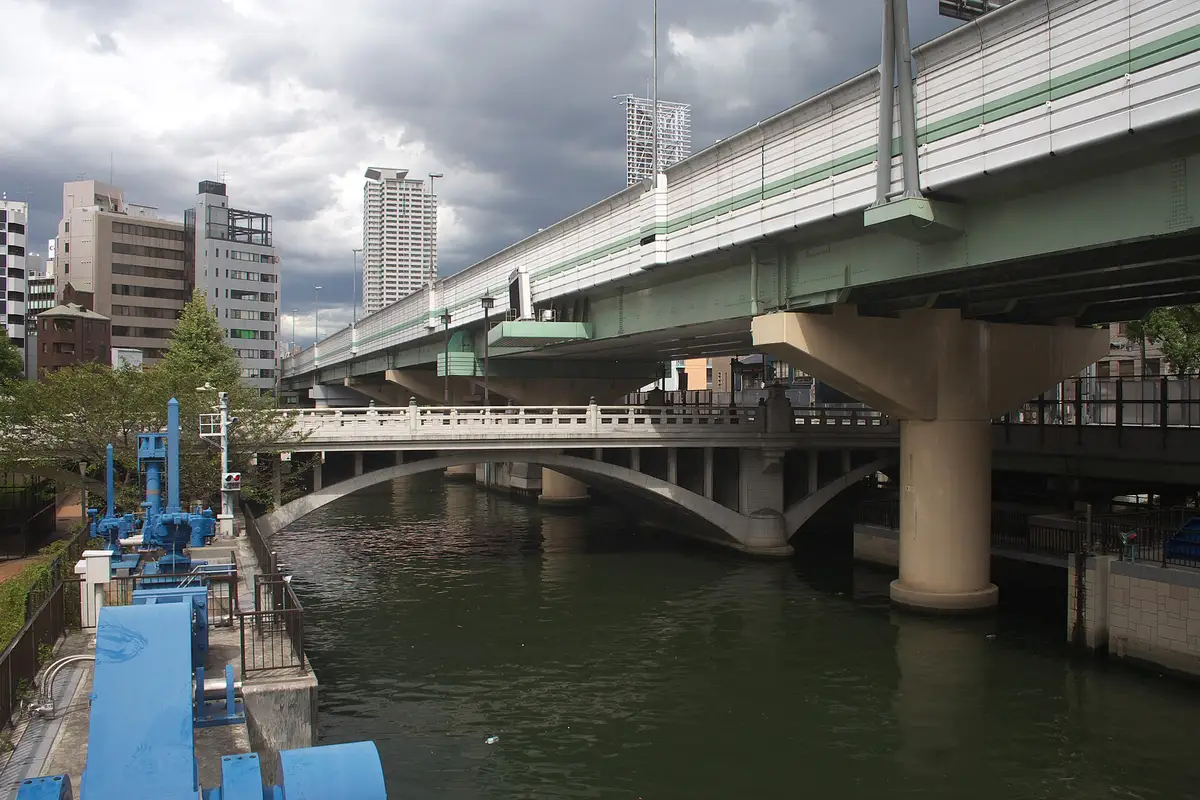
Korai Bridge
高麗橋· Bridge
About
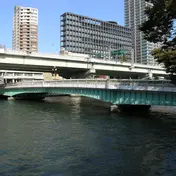
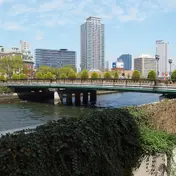
Korai Bridge crosses the Higashiyokobori River. The bridge is said to have existed since the Toyotomi period, and its name is explained in more than one way: that the Koma no Murotsumi, a guesthouse that received envoys from the states of the Korean peninsula in ancient times, stood here, or that a base for trade with the Korean peninsula was in this area when Toyotomi Hideyoshi laid out the town of Osaka. In the Edo period it was a kogibashi, a bridge maintained by the shogunate, and the shogunate's kosatsu, the board on which laws and notices were posted, stood at its western end. Korai bashi suji was lined with the Mitsui kimono shop, now the Mitsukoshi department store, and the Mitsui money exchange, and was full of life. In the Keicho era (1596 to 1614) it is said to have been a handsome bridge with giboshi finials. The Meiji government placed on Korai Bridge a ritei genpyo, a marker showing the start and end point of roads, and made it the point from which road distances in western Japan were measured. In Meiji 3 (1870) it became the first bridge in Osaka to be rebuilt as an iron bridge imported from Britain, and people of the time were amazed by the spectacle of its black sheen under the gas lamps and gave it the fond nickname Kurogane bashi, the iron bridge. The present bridge is a reinforced concrete arch bridge rebuilt in Showa 4 (1929), and the giboshi on its railings and the main posts modelled on the turret house that stood at the western end tell of the bridge's history.
Translated from the Osaka Prefecture and Osaka City tourist listings (観光施設一覧, CC BY 4.0).
Getting there


Good to know


Area

Listed in 大阪府・大阪市 観光施設一覧 (CC BY 4.0), Wikidata (CC0). Photo credits are on the terms page.