Sumiyoshi Taisha
住吉大社· Shrine
About
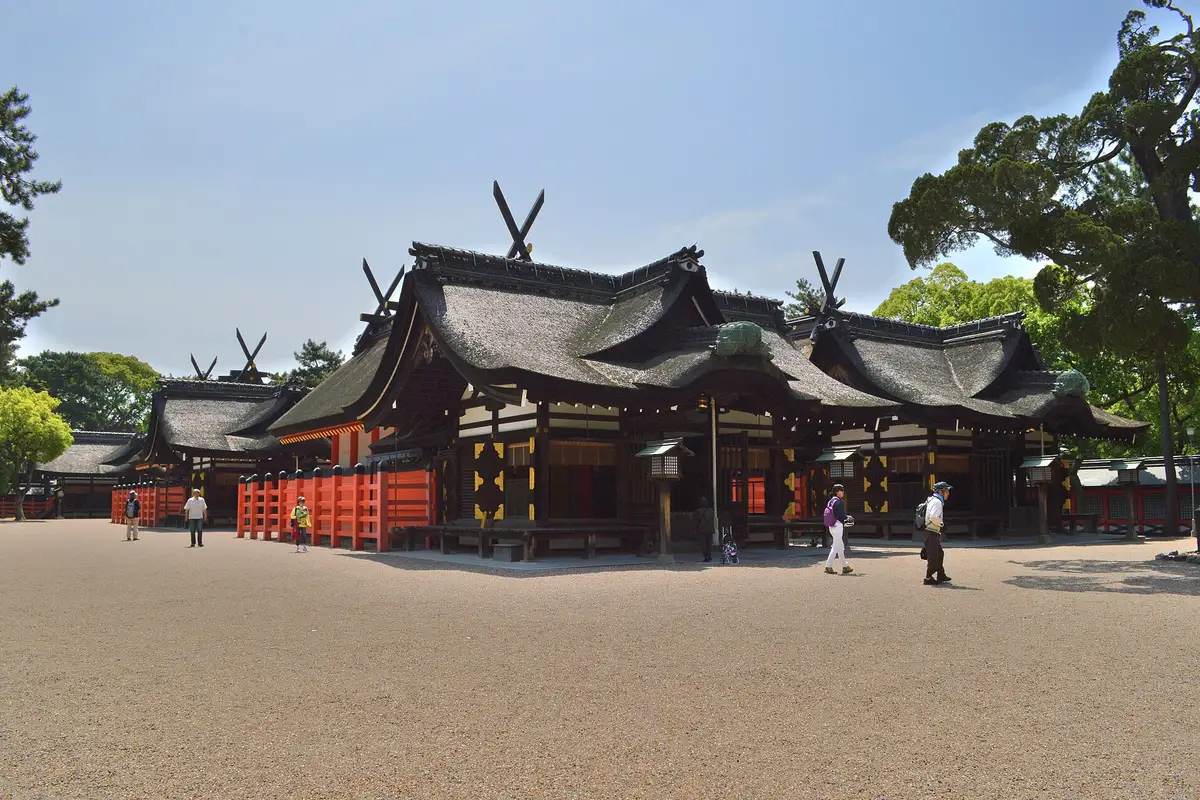
In Osaka the shrine is affectionately called Sumiyossan. It is the head shrine of the roughly 2,300 Sumiyoshi shrines across Japan, the ichinomiya of Settsu Province and a former kanpei-taisha. It has been worshipped since early times as the god of safe voyages, of purification, of farming, of waka poetry, of the martial arts and of sumo, and its founding goes back 1,800 years. Its deities, in order from the First to the Fourth Main Hall, are Sokotsutsunoo no Mikoto, Nakatsutsunoo no Mikoto, Uwatsutsunoo no Mikoto and Empress Jingu. The main sanctuary is divided into four halls, the first three standing one behind another and the fourth beside the third, an arrangement found at no other shrine, like a fleet of ships crossing the open sea. It has been described this way: the three halls advancing in line are the fish-scale formation, the one hall opening out to the side is the crane-wing formation, and so they express the method of the eight battle arrays. The halls are built in the Sumiyoshi-zukuri style, which has three marks: pillars, rafters and bargeboards painted vermilion with panel walls coated in white gofun; a cypress-bark roof with the strong straight lines of a gable; and a straight tsumairi entrance at the gable end. This is the oldest of the special styles in the history of shrine architecture and is designated a National Treasure. The shrine has more than thirty auxiliary shrines, subsidiary shrines and small shrines, and many rites and festivals including the Sumiyoshi Matsuri, and its precincts hold buildings and objects preserved as National Treasures and Important Cultural Properties.
Translated and shortened from the Osaka Prefecture and Osaka City tourist listings (観光施設一覧, CC BY 4.0).
Getting there

Good to know


Designated cultural properties
Osaka Prefecture's list of designated cultural properties names this place as the owner of 21, among them 1 National Treasure and 6 Important Cultural Properties. Objects are not necessarily on view.
And 15 more on the list. 大阪府 文化財一覧 (CC BY 4.0), current at 2024-05-01. Joined by owner name; long names are shortened to the buildings or the object.


Listed in 大阪府・大阪市 観光施設一覧 (CC BY 4.0), Wikidata (CC0). Photo credits are on the terms page.