川端康成文学碑
Historic site
About
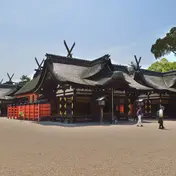
A literary monument carrying, in Kawabata Yasunari's own hand, a passage from his Sorihashi: coming down the arched bridge is more frightening than going up, and he came down carried in his mother's arms. It stands just to the right after you cross the arched bridge of Sumiyoshi Taisha, the greatest shrine in Osaka, known as the guardian of voyages. Kawabata (1899-1972), the first Japanese writer to win the Nobel Prize in Literature, known for work that crystallised into poetry the life and death trembling inside a moment of tension, spent his first three years in the house where he was born, in a corner of a restaurant facing Osaka Tenmangu from the south, and then lost both parents one after the other. He was raised after that at his grandparents' house in what is now Shukunosho-cho in Ibaraki, lost his grandmother and his sister in turn, and lived alone with his grandfather until he was sixteen. The exchanges with his grandfather just before his death are set down in detail in Diary of My Sixteenth Year. He later went to Tokyo and published The Izu Dancer, Snow Country and other famous works one after another, but the works set in his native Osaka are few: Sorihashi of Showa 23 (1948) and Sumiyoshi of the year after, Showa 24 (1949), and little more. Walk Sumiyoshi, Sumiyoshi Taisha and the monument in its grounds, and Kawabata's writing is close at hand.
Translated from the Osaka Prefecture and Osaka City tourist listings (観光施設一覧, CC BY 4.0).
Getting there

Good to know




Listed in 大阪府・大阪市 観光施設一覧 (CC BY 4.0). Photo credits are on the terms page.